
Reflection from the River
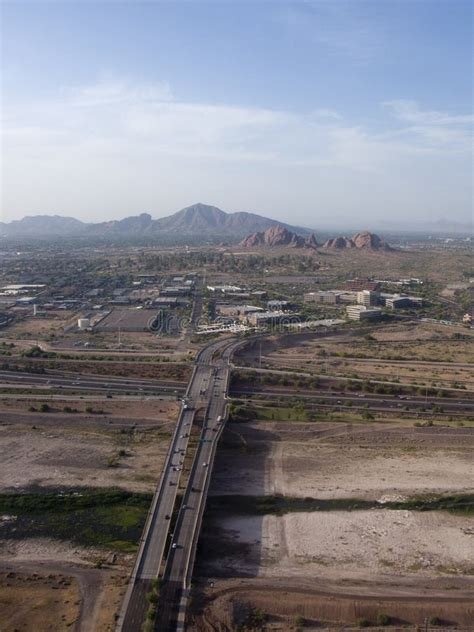
For a long time, I thought of the Rio Salado as an environmental challenge wrapped in a complicated municipal structure. It was a project with overlapping jurisdictions, hydrological concerns, design constraints, and the usual pressures of revitalization work. When I walked the dry riverbed for the first time, that’s the lens I carried. Three years later, that frame feels impossibly small.
After listening to elders share stories of a river that sustained entire nations, after hearing young people name the river as a wound, after witnessing artists describe the land as a memory still breathing, I came to understand that the Rio is not a project at all. It is a relationship. One that has survived extraction, dispossession, infrastructural violence, and decades of imposed forgetting. One that holds its own record of injury and, still, an unbroken thread of possibility.
Working across Institutions, Departments, Tribal partners, The Sagrado Galleria, and the Protectors of the Salt River offered a vantage point into how planning cultures collide with the needs of a place like the Rio. Municipal systems excel at capital projects and predictable timelines. Philanthropic structures optimize for strategy and measurable outcomes. Planners, especially those trained within design-forward traditions, often approach landscapes as canvases—spaces awaiting form, coherence, and visible transformation.
The Rio resists that approach.
It insists that the first story is not design. The first story is harm. And then, repair.
The Pushed Out report on South Phoenix documents in striking clarity how policing, zoning, racial capitalism, and land commodification severed relationships between people and place, creating patterns of displacement and environmental injury that persist today. The river lives inside that same history. Its bed carries the weight of dispossession—from the forced disconnection of O’otham and Piipaash communities to the reshaping of ancestral waterways for the benefit of industry and settler expansion. These harms are not theoretical; they are sedimented into the land.
In many planning environments, these truths are inconvenient. They slow down the project. They expand the scope. They ask institutions to name their own complicity. The contributors to Repair and Healing in Planning describe this dynamic as a profession that often drifts into “unauthentic words”—talk untethered from transformation, knowledge unaccompanied by atonement. I saw that tension repeatedly: strong design visions proposed before relationships formed; technical frameworks advancing faster than trust could take root; consultation treated as a procedural step rather than a sovereign protocol.
Yet along the river, I also witnessed something else.
I saw the strength of Indigenous governance shaping land stewardship in ways no design guideline ever could. I walked with youth who treated the river as a relative whose healing they were responsible for. I observed artists activate cultural memory as a form of planning—what Indigenous planning scholars describe as decision-making rooted in land, story, relational ethics, and sovereignty. These practices created a rhythm that was truer to the river’s pace than anything a municipal timeline could produce.
In these spaces, planning functioned less as a technical exercise and more as ceremony. It became a process of returning meaning to land that had been systematically stripped of it.
The mismatch between institutional planning cultures and the river’s needs showed up in subtle ways. When visual coherence outranked cultural consent. When aesthetic authority overshadowed community authority. When the land was described as underutilized rather than as a site of ecological and cultural memory. When community engagement was positioned as an input instead of a lineage. These tendencies echo the warnings of abolitionist planning: that without intentional shifts in power, planning will reproduce the very forms of erasure it claims to address.
But I also saw how quickly the trajectory shifts when community governance is centered. When Protectors of the Salt River define the principles. When Tribal leaders determine the protocols. When artists shape narrative. When youth hold decision-making roles rather than symbolic ones. When the river itself is treated as a collaborator rather than a backdrop.
Under those conditions, the work feels honest. It feels aligned with healing rather than harm. It feels consistent with what reparative planning demands: radical honesty, acknowledgment, atonement, and enforceable commitments to non-repetition.
My own role evolved accordingly. I stopped thinking of myself as an intermediary between institutions and community. Instead, I became responsible for protecting the relational work from being eclipsed by institutional urgency. My job was often to slow the process down, to widen the frame, to redirect energy toward Indigenous and grassroots leadership, and to prevent the gravitational pull of traditional planning—from guidelines to renderings to capital priorities—from overwhelming the deeper work.
Through this, I learned that the future of the Rio Salado will not be defined by a single design vision. It will not be shaped by a star planner or a signature intervention. It will emerge through relationships—between Tribal nations and community stewards, between youth and elders, between the land and all who are accountable to it.
The river is already teaching us how to move.
It teaches that revitalization without repair is displacement by another name.
It teaches that landscapes remember what institutions forget.
It teaches that healing is governance.
It teaches that design without consent is harm.
It teaches that those who have carried the river through generations of injury are the ones who know how to heal it.
What I carry now is simple:
The Rio does not need to be designed.
The Rio needs to be restored.
And the people who hold that knowledge are already here, already leading, already imagining futures that planning alone could never conceive.
The work is to follow their lead.
References
Bates, L. K., Towne, S. A., Jordan, C. P., & Lelliott, K. L. (2018). Race and Spatial Imaginary: Planning Otherwise.
Planning Theory & Practice.
Knapp, C., Poe, J., & Forester, J. (2022). Repair and Healing in Planning.
Planning Theory & Practice.
Mass Liberation Arizona. (2022). Pushed Out: Displacement in South Phoenix. displacement_in_south_phoenix__2022.pdf
Porter, L., Matunga, H., Viswanathan, L., Patrick, L., Walker, R., Sandercock, L., … Jojola, T. (2017). Indigenous Planning: From Principles to Practice.
Planning Theory & Practice.
Abolitionist Planning Collective. (2017). Abolitionist Sanctuary Planning.