
My great great grandmother named me before she knew she did
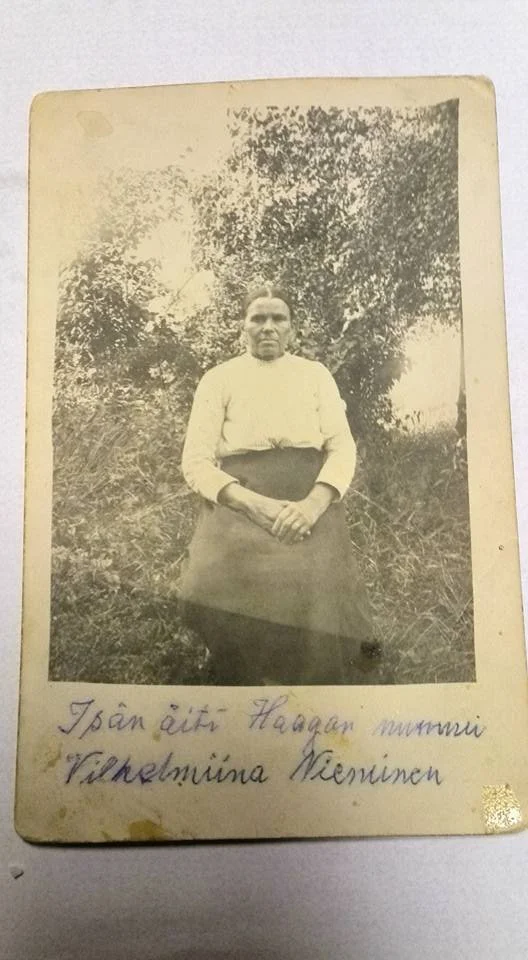
This is Vilhelmiina Nieminen. The inscription reads "Isän äiti Haagan mummu Vilhelmiina Nieminen"
I named my practice SISU before I fully understood why.
SISU is a Finnish word. It doesn't translate cleanly into English and resists any single definition. People try: grit, resilience, inner fire, the will to continue when continuation seems impossible. But Finns will tell you those definitions miss something. SISU isn't about optimism. It isn't about believing things will get better. It's about moving anyway. It's about the particular stubbornness of a people who have survived at the edge of the world, in conditions that should have broken them, and have not broken.
My grandmother was Finnish. She immigrated after World War II, made her way to Toronto, and met my grandfather at an immigrant community center. It was the kind of place built for people who had been displaced, who were looking for something that felt like home. She built a life. She raised children. She came to Chicago. She did not, as far as I know, ever tell anyone what she had seen or carried from those war years in Finland.
She was the kind of woman who kept moving.
This is the part I have struggled with articulating.
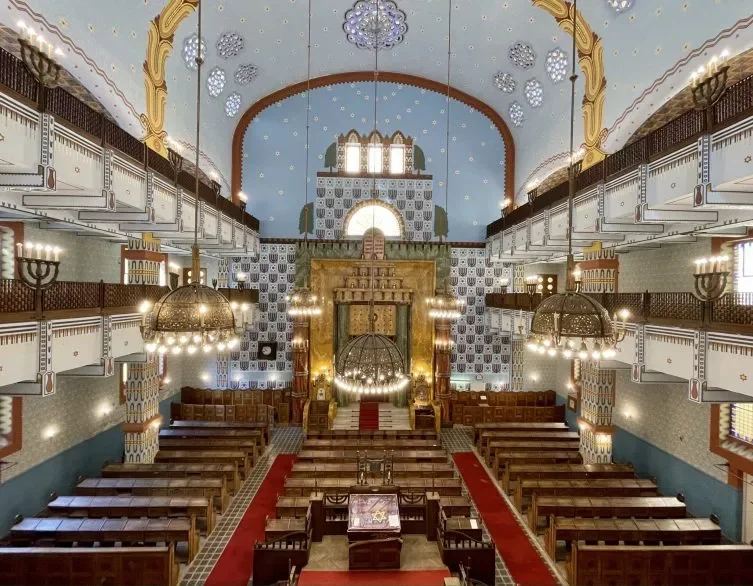
My mother was an Orthodox Jewish woman. She was the first in her family's generational line to marry outside the faith. In 1985, in Chicago, she married my father: the son of that Finnish grandmother, and of a grandfather who had served as a Nazi Youth soldier.
I am their child.
· · ·
I have spent my career drawn to rooms where harm has been named. Restorative justice circles, community healing gatherings, participatory planning processes where people bring what they have been carrying and set it on a table where others can see it.
It has taken me a long time to understand that the reason I can hold that space is because I grew up inside the problem I am trying to solve.
My mother's family sat shiva for her when she married my father. In Orthodox tradition, shiva is the mourning ritual for the dead. Her community treated her marriage as a death: the death of the line, the death of continuity, the loss of another generation to a world that had already taken so much. She was the first. She crossed a threshold her entire lineage had held for centuries, in the same year the American Jewish community was publicly confronting whether a U.S. president should lay a wreath on SS graves.
She was, by Jewish law, still Jewish. So was I. Matrilineal descent means the line passes through the mother regardless of the father, which meant I was fully, irrevocably, legally Jewish, raised in a household that treated being Jewish as something to be diminished. That contradiction doesn't resolve itself. It gets carried.
There is no scholarship on this. I have looked. The fields that should study it have developed as separate silos and have never converged on a case like mine. Researchers have estimated the compound probability of this specific convergence at roughly one occurrence per decade in the entire United States. One of the first things that gave me language for it wasn't a clinical framework. It was a word from my grandmother's people.
SISU.
Not because things worked out. Not because the wound healed cleanly. Because some part of me understood, even before I had words for it, that moving anyway was the only inheritance worth claiming from the house I grew up in.
· · ·
This is the first piece in a series I am calling On Origins. It is an attempt to do what I ask of every community I work with: to name what is actually in the room before we try to repair anything.
In the pieces that follow, I will write about what it means to build reparatively from the inside of an unrepaired thing.
I am still learning what SISU means. I think that's correct. I think the word was always meant to be lived into rather than defined.